






Published in the Journal of the American Medical Informatics Association: JAMIA. Here is a link to the article.
Regenstrief Institute author: Chris Harle, PhD
The content below has been provided by Dr. Harle.
Introduction
Today’s world is awash in data that can be used to improve the practice and science of healthcare. But, wrangling all that data, putting it in a form that’s useful to researchers, and keeping it protected is a lot of work. This paper can improve the work of research data services teams – the data analysts, engineers and operators who serve data to customers daily the same way restaurants serve up food.
A food analogy framework
This paper describes a novel framework that teams can use to set up their businesses of securely delivering useful electronic health record, health information exchange, and other real-world health data to scientists. The paper uses a food analogy that teams can use to create vending machine and fast-food data as well as personal chef partnerships with their scientist customers.
What to consider
Research data services teams should look for opportunities to continually quality improve their processes using the paper’s framework as a guide.
Future direction
Next, we are using the framework to analyze and continually improve the research data service operations we offer at Regenstrief. One improvement is looking for ways to offer uncompromised reduction in our services – that is finding efficiencies that save time and money but don’t sacrifice customer service.
The study was supported by the National Institute of Health’s National Library of Medicine (T15LM012502).
Authors
Tanja Magoc1, Leigh Anne Tang2,3, Khoa A Nguyen4, Christopher A Harle2,3
Affiliations
1Quality and Patient Safety Initiative, College of Medicine, University of Florida, Gainesville, FL 32608, United States.
2Health Policy and Management, Richard M. Fairbanks School of Public Health, Indiana University, Indianapolis, IN 46202, United States.
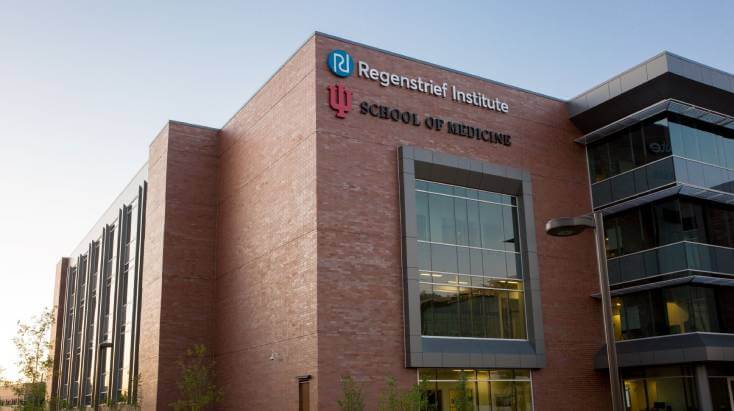
3Regenstrief Data Services and Center for Biomedical Informatics, Regenstrief Institute, Indianapolis, IN 46202, United States.
4Department of Pharmacotherapy and Translational Research, College of Pharmacy, University of Florida, Gainesville, FL 32608, United States.
Partners
The Latest