






Published in The Lancet Respiratory Medicine. Here is a link to the article.
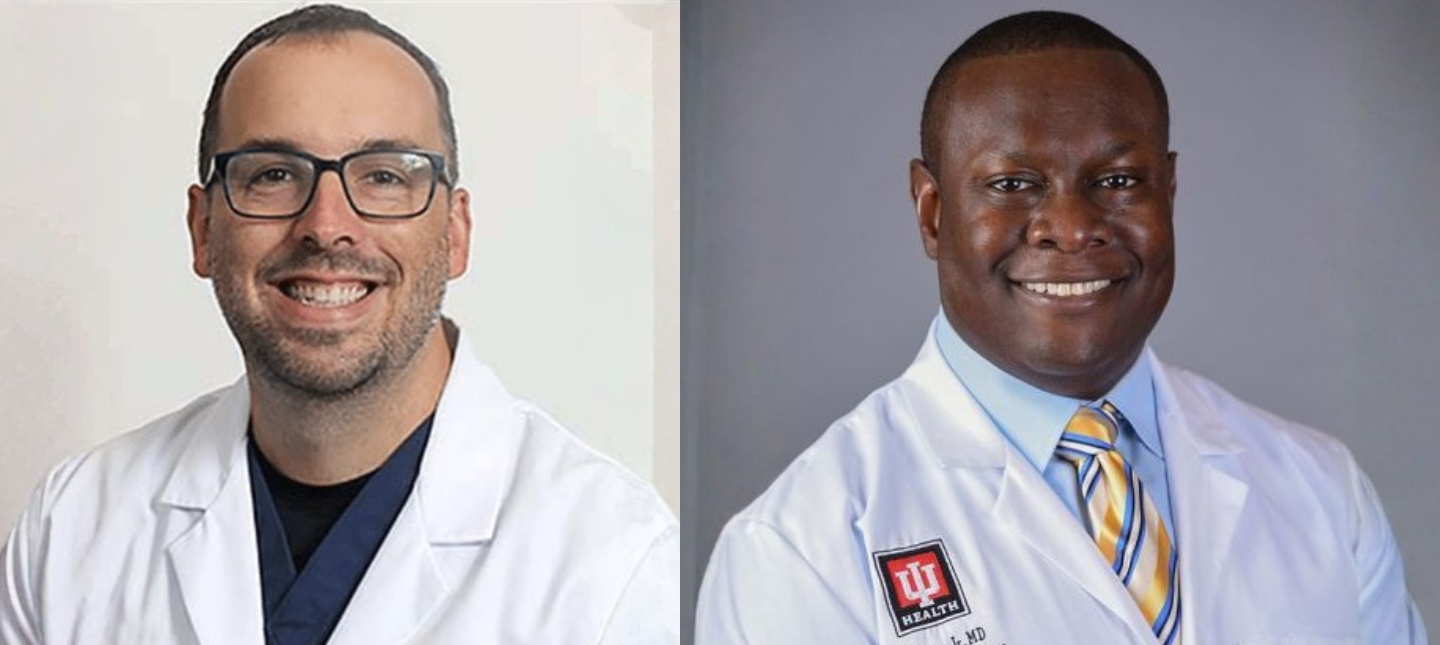
Regenstrief Institute authors: Babar Khan, M.D., M.S.
In this follow-up study of the MIND-USA trial, antipsychotics haloperidol and ziprasidone showed no significant benefit over placebo in improving long-term cognitive, functional, psychological, or quality-of-life outcomes in critically ill patients treated for delirium. A third of survivors experienced cognitive impairment at 3 and 12 months, and over half had limitations preventing employment. These findings suggest antipsychotics should not be routinely used to treat delirium in critically ill adults.
Authors:
Affiliations
1Division of Allergy, Pulmonary, and Critical Care Medicine, Department of Medicine, Vanderbilt University Medical Center, Nashville, TN, USA; Critical Illness, Brain Dysfunction, and Survivorship (CIBS) Center, Nashville, TN, USA; Veterans Affairs Tennessee Valley Health System Geriatric Research, Education, and Clinical Center (GRECC), Nashville, TN, USA.
2Critical Illness, Brain Dysfunction, and Survivorship (CIBS) Center, Nashville, TN, USA; Veterans Affairs Tennessee Valley Health System Geriatric Research, Education, and Clinical Center (GRECC), Nashville, TN, USA; Vanderbilt University School of Nursing, Nashville, TN, USA.
3Critical Illness, Brain Dysfunction, and Survivorship (CIBS) Center, Nashville, TN, USA.
4Division of Critical Care Medicine, Division of Pulmonary Medicine, Department of Medicine, Montefiore Healthcare System/Albert Einstein College of Medicine, New York, NY, USA.
5Division of Pulmonary, Critical Care and Sleep Medicine, University of California San Diego, La Jolla, CA, USA.
6Division of Pulmonary, Critical Care, Sleep and Occupational Medicine, Department of Medicine, Indiana University School of Medicine, Indianapolis, IN, USA.
7Division of Pulmonary, Critical Care and Sleep Medicine, Department of Medicine, Yale University School of Medicine, New Haven, CT, USA.
8Division of Pulmonary, Critical Care and Occupational Medicine, University of Iowa, Iowa City, IA, USA.
9Division of Pulmonary Disease and Critical Care Medicine, Department of Medicine, University of Cincinnati, Cincinnati, OH, USA.
10Division of Pulmonary, Critical Care, and Sleep Medicine, The Ohio State University College of Medicine, Columbus, OH, USA.
11Division of Pulmonary Diseases and Critical Care Medicine, Department of Medicine, University of North Carolina School of Medicine, Chapel Hill, NC, USA.
12Division of Pulmonary and Critical Care Medicine, Department of Medicine, Oregon Health and Science University School of Medicine, Portland, OR, USA.
13Department of Anesthesiology, University of Maryland School of Medicine, Baltimore, MD, USA.
14Division of Pulmonary Sciences and Critical Care Medicine, Department of Medicine, University of Colorado School of Medicine, Aurora, CO, USA.
15Novant Healthcare, Winston-Salem, NC, USA.
16Division of Pulmonary and Critical Care Medicine, Department of Internal Medicine, University of Michigan, Ann Arbor, MI, USA.
17Division of Pulmonary, Allergy, and Critical Care Medicine, Department of Medicine, Hospital of the University of Pennsylvania, Philadelphia, PA, USA.
18Department of Anesthesiology, Section on Critical Care, Wake Forest University School of Medicine, Winston-Salem, NC, USA.
19Texas Health Resources, Arlington, TX, USA.
20Department of Biostatistics, Vanderbilt University Medical Center, Nashville, TN, USA; Critical Illness, Brain Dysfunction, and Survivorship (CIBS) Center, Nashville, TN, USA.
21Division of Allergy, Pulmonary, and Critical Care Medicine, Department of Medicine, Vanderbilt University Medical Center, Nashville, TN, USA; Critical Illness, Brain Dysfunction, and Survivorship (CIBS) Center, Nashville, TN, USA.
22Division of Anesthesiology Critical Care Medicine, Department of Anesthesiology, Vanderbilt University Medical Center, Nashville, TN, USA; Critical Illness, Brain Dysfunction, and Survivorship (CIBS) Center, Nashville, TN, USA.
23Critical Illness, Brain Dysfunction, and Survivorship (CIBS) Center, Nashville, TN, USA; Division of Pulmonary, Critical Care, and Sleep Medicine, The Ohio State University College of Medicine, Columbus, OH, USA.
24Section of Surgical Sciences, Division of Acute Care Surgery, Department of Surgery, Vanderbilt University Medical Center, Nashville, TN, USA; Critical Illness, Brain Dysfunction, and Survivorship (CIBS) Center, Nashville, TN, USA.
25Department of Pharmaceutical Services, Vanderbilt University Medical Center, Nashville, TN, USA; Critical Illness, Brain Dysfunction, and Survivorship (CIBS) Center, Nashville, TN, USA.
26Critical Illness, Brain Dysfunction, and Survivorship (CIBS) Center, Nashville, TN, USA; Center for Research, Investigation, and Systems Modeling of Acute Illness (CRISMA), Department of Critical Care Medicine, University of Pittsburgh School of Medicine, Pittsburgh, PA, USA.
The Latest