






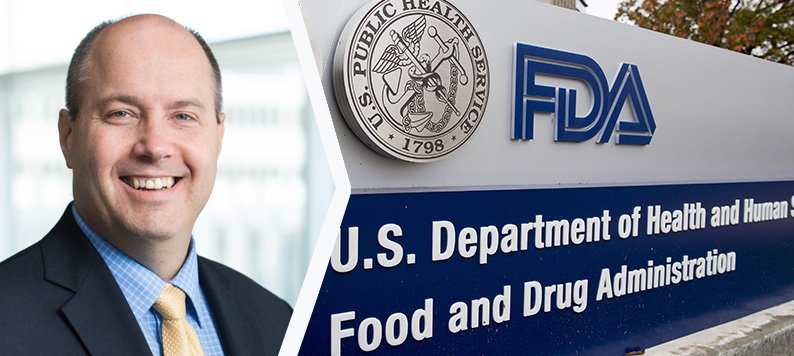
Regenstrief Institute faculty member Shaun Grannis, M.D., participated in a private workshop in Washington, D.C. on considerations and potential best practices for large-scale curation of real-world data that could support regulatory decision-making. The panel was convened under a cooperative agreement between the U.S. Food and Drug Administration and Duke University Robert J. Margolis, M.D., Center for Health Policy.
In the coming years, opportunities will emerge to make better use of real-world data within the FDA’s regulatory framework. More consistent use of that data can improve the efficiency of traditional randomized control trials, and there may be opportunities to leverage that data and evidence in support of supplemental approval or labeling actions. FDA officials are asking for the input of stakeholders from across the country to advance policy development related to the regulatory acceptability of real-word evidence. This workshop gathered perspective and explored best practices for the data curation process.
Dr. Grannis, who is the director for the Regenstrief Center for Biomedical Informatics and an associate professor at the Indiana University School of Medicine, shared his expertise on data integration. He spoke about the best strategies to link data together and the best methods to measure matching accuracy. Dr. Grannis’ research is focused on improving discovery and decision support by developing, testing and implementing innovative approaches for data integration, patient matching, predictive modeling and other novel data science use cases.
From here, the FDA will evaluate the input from the workshop and decide how it will influence future policies and practice. The agency is working to meet real-world evidence milestones as established in the 21st Century Cures Act and the sixth Prescription Drug User Fee Act.
The Latest