



Regenstrief Institute and Indiana University School of Medicine research scientist Kun Huang, PhD, is leading a team as part of the Indiana University Alzheimer’s disease drug discovery center. Dr. Huang is the director of the bioinformatics and computational biology core of the center, which is funded by the National Institute on Aging (NIA), part of the National Institutes of Health.
The goal of the center is to improve and diversify the Alzheimer’s disease drug development pipeline and accelerate the development of treatments to help millions of Americans who suffer from the disease. About 5.5 million Americans currently have Alzheimer’s. That number is projected to rise as high as 14 million by 2050.
Research at the drug discovery center will initially focus on proteins related to the brain’s immune system. There is evidence the immune system genes may be connected to Alzheimer’s. Those proteins will be identified and analyzed throughout the research process to create a refined list of proteins that could be targets for drugs.
The Bioinformatics and Computational Biology Core (BCB Core), led by Dr. Huang, will play a critical role in the center’s team. The researchers will develop the infrastructure to create, analyze and share large datasets with information related to Alzheimer’s. They will also establish data integration methods for predicting and prioritizing druggable target genes as well as provide bioinformatics data process and analysis support for the lifecycle of the drug target identification and testing.
“This research will reinvigorate the search for a cure for Alzheimer’s disease,” said Dr. Huang. “The goal of the BCB Core is to maximize the usage of available data and technology to identify drug targets and accelerate the development of drugs that will alleviate or even cure this common disease.”
The center is a partnership between IU and Purdue Institute for Drug Discovery and is led by Alan Palkowitz, PhD, a senior research professor at IU School of Medicine, and Bruce Lamb, PhD, the executive director of Stark Neurosciences Research Institute. It is one of two centers in the country. The IU-led center is funded by NIH grant number U54AG065181.
All data, methods and tools generated by the Alzheimer’s disease drug discovery centers will rapidly be made available to researchers from academia, nonprofit research organizations, biotech and the pharmaceutical industry for use in drug discovery and basic biology research.
More about Kun Huang, PhD
In addition to his appointment as a Regenstrief Institute research scientist, Kun Huang, PhD, is assistant dean for data sciences, Precision Health Initiative professor of genomics data sciences and professor of medicine at Indiana University School of Medicine. Dr. Huang is also a member of Indiana University Melvin and Bren Simon Cancer Center.
About Regenstrief Institute
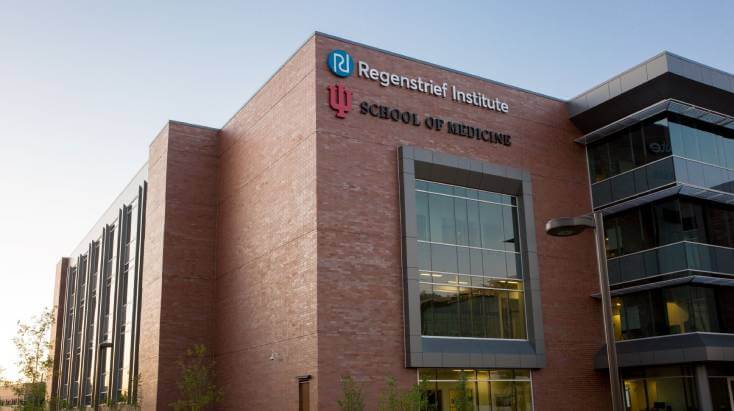
Founded in 1969 in Indianapolis, the Regenstrief Institute is a local, national and global leader dedicated to a world where better information empowers people to end disease and realize true health. A key research partner to Indiana University, Regenstrief and its research scientists are responsible for a growing number of major healthcare innovations and studies. Examples range from the development of global health information technology standards that enable the use and interoperability of electronic health records to improving patient-physician communications, to creating models of care that inform practice and improve the lives of patients around the globe.
Regenstrief Institute is celebrating 50 years of healthcare innovation. Sam Regenstrief, a successful entrepreneur from Connersville, Indiana, founded the institute with the goal of making healthcare more efficient and accessible for everyone. His vision continues to guide the institute’s research mission.
The Latest