


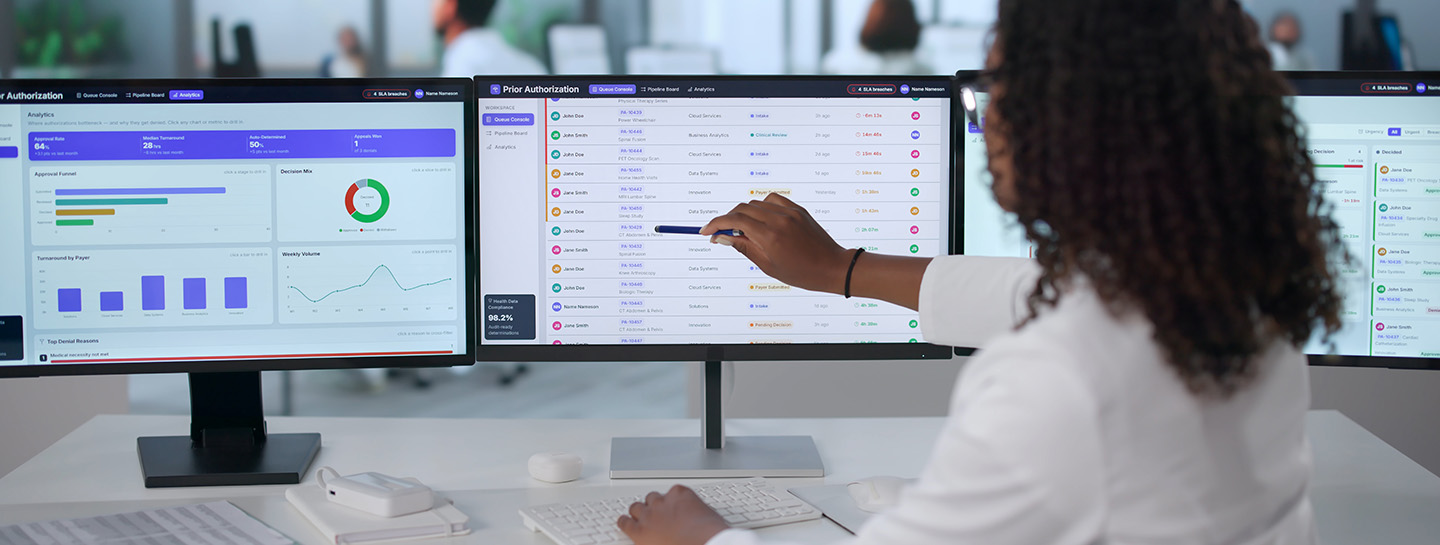





The COVID-19 dashboards created by Regenstrief Institute and its partners have been instrumental in the decision making of public health and healthcare leaders. The easy-to-understand dashboard data extends the understanding of the current COVID-19 situation, helping to identify new patterns, and allowing institutions to enact evidence-based policies.
One use for data gathered and illustrated by the dashboards is to inform community partners to address health disparities. The Marion County Health Department (MCHD) used this data to target underserved communities and provide additional support. The program helped curb new cases of COVID-19 by establishing new testing centers and deploying informational campaigns in areas with high disease burden. The resource allocation decisions were based on statistics relating specifically to COVID-19, instead of relying on predetermined criteria. Regenstrief Director of Public Health Informatics Brian Dixon, PhD, MPA, and Marion County Public Health Department Director Virginia Caine, M.D., helped to lead the data effort.
The data from the dashboards were also used by other local and state leaders to make policy decisions and respond to outbreaks.
These dashboards are made possible due to the collaborative environment that exists in Indiana. The Indiana Pandemic Collaborative, the group responsible for creating these visualizations, is made up of dozens of organizations bringing together their skills and resources to address the pandemic. Former Regenstrief President and CEO Peter Embi, M.D., M.S., led the formation of the collaborative, and Vice President for Data and Analytics Shaun Grannis, M.D., M.S., as well as Dr. Dixon played important roles in dashboard development.
Members of IPIC include Regenstrief, Indiana Management Performance Hub, Indiana Health Information Exchange, Eli Lilly and many others.
The Latest