





Editorial examines complexities of relationships and communication
A foundation of trust is crucial to help patients with chronic pain have productive conversations about pain management with their clinicians as well as better overall health outcomes, especially when it comes to opioids, according to a viewpoint article in the Journal of General Internal Medicine written by authors from Regenstrief Institute, the U.S. Department of Veterans Affairs and the University of California, Davis.
Shared decision-making is a process in which clinicians and patients work together to make decisions on treatments and care plans based on risks and benefits and patients’ preferences and values.
The authors argue that while shared decision-making is a well-recognized strategy for approaching treatment discussions between providers and patients, it is not always enough. They acknowledge that these models are a good framework for chronic pain management in primary care; however, they urge more emphasis be placed on building and nurturing relationships, which serve as the foundation of productive treatment discussions and decisions.
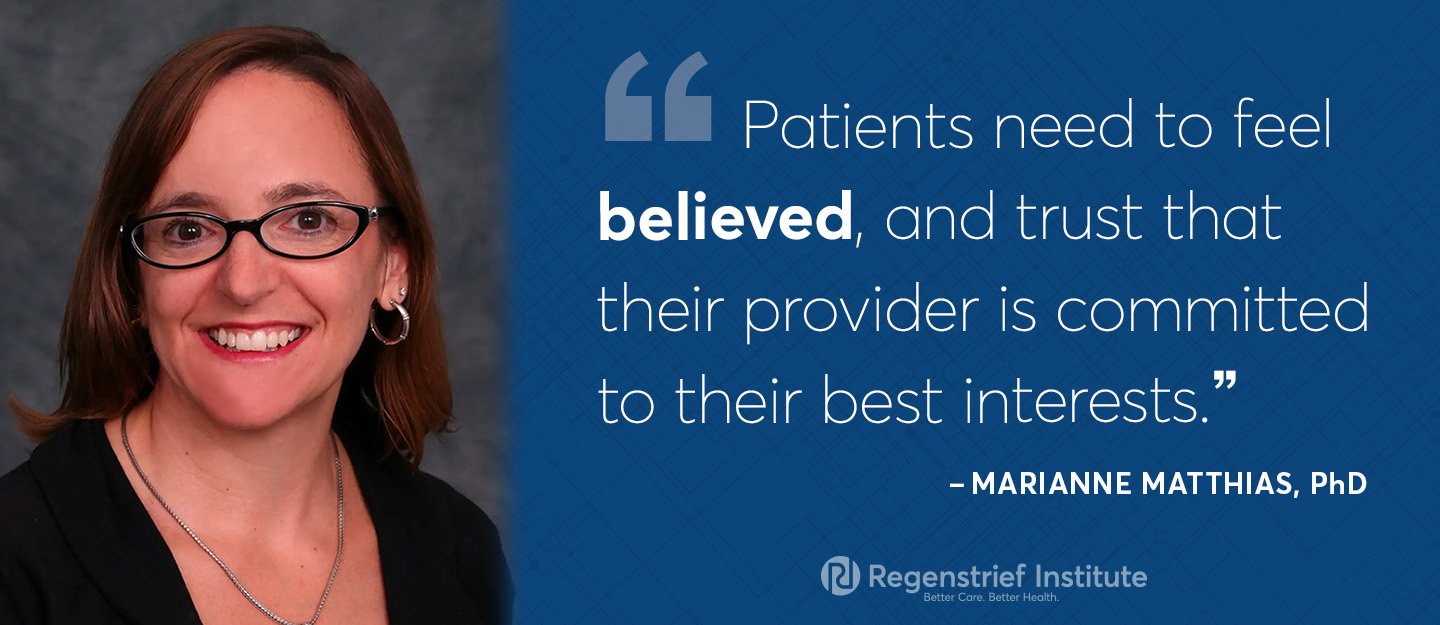
“Treating pain is complex, and typically requires a combination of different treatments, along with trial and error,” said co-author Marianne Matthias, PhD, a Regenstrief research scientist and an investigator with the VA Health Services Research and Development Center for Health Information and Communication, Richard L. Roudebush VA Medical Center in Indianapolis. “Just being a part of the treatment discussion is not sufficient. The patient must be comfortable telling the clinician the types of treatment the patient is willing to do and communicating when something is not working. They need to feel believed, and trust that their provider is committed to their best interests. This is especially helpful in discussions about the use of opioids.”
The authors point out that shared decision-making does not offer strategies for navigating disagreements, which happen especially often when opioids are discussed.
Dr. Matthias continued, “These disagreements are often emotional and can lead to a breakdown in communication, and sometimes even an end to the clinician-patient relationship, which can negatively affect a patient’s health. A trusting relationship can make a patient more open to their clinician’s recommendations, especially if patients are skeptical about a proposed recommendation.”
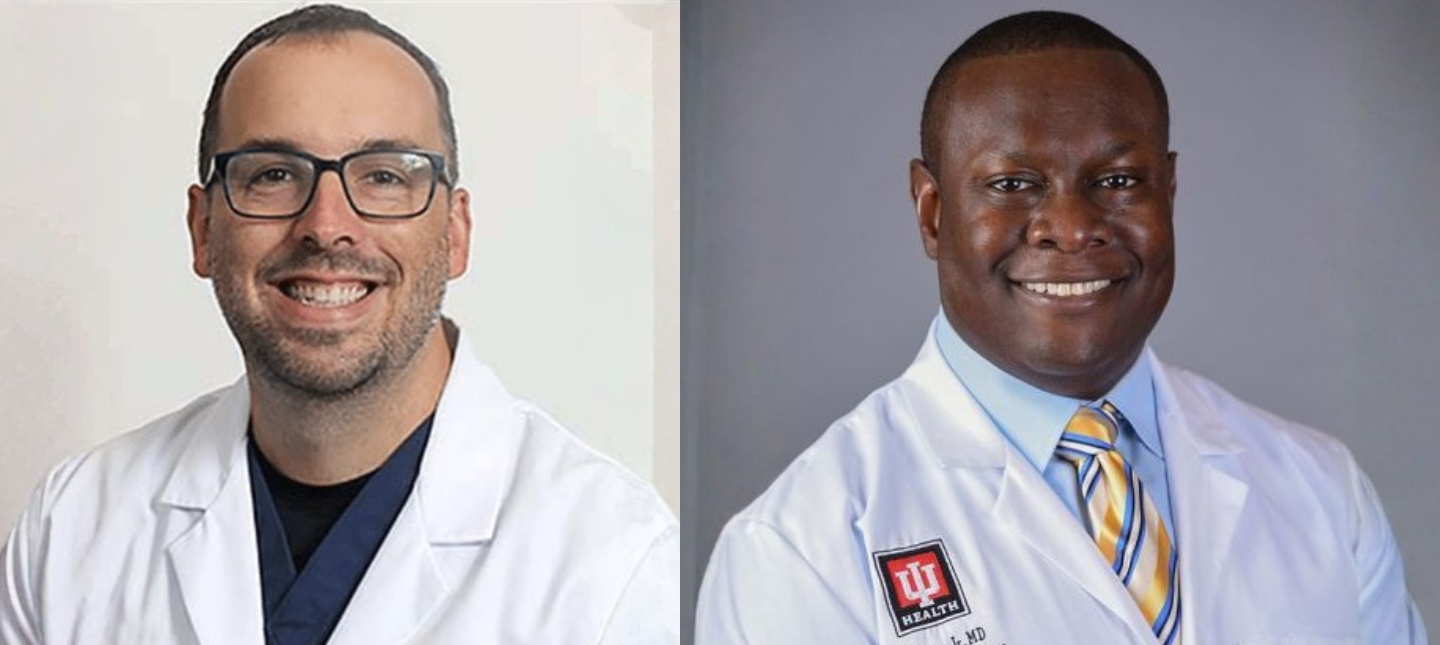
“Reducing frustration and improving management of chronic pain in primary care: Is shared decision-making sufficient?” is published online ahead of print in the Journal of General Internal Medicine. Dr. Matthias is a co-author along with Stephen Henry, M.D. from the University of California, Davis Department of Internal Medicine and the UC Davis Center for Healthcare Policy and Research.
About Regenstrief Institute
Founded in 1969 in Indianapolis, the Regenstrief Institute is a local, national and global leader dedicated to a world where better information empowers people to end disease and realize true health. A key research partner to Indiana University, Regenstrief and its research scientists are responsible for a growing number of major healthcare innovations and studies. Examples range from the development of global health information technology standards that enable the use and interoperability of electronic health records to improving patient-physician communications, to creating models of care that inform practice and improve the lives of patients around the globe.
Sam Regenstrief, a nationally successful entrepreneur from Connersville, Indiana, founded the institute with the goal of making healthcare more efficient and accessible for everyone. His vision continues to guide the institute’s research mission.
About Richard L. Roudebush Veterans Affairs (VA) Medical Center
Established in 1932, the Richard L. Roudebush VA Medical Center serves Veterans from across Indiana and western Illinois. The Roudebush VAMC is one of the largest and most complex medical centers in the Department of Veterans Affairs, and provides acute inpatient medical, surgical, psychiatric, rehabilitation, and neurological care to more than 60,000 Veterans annually. Some of the many services available to Veterans include emergency medicine, primary care, cardiac care, radiation oncology, audiology, community-based extended care and community VA clinics.
About Marianne S. Matthias, PhD
In addition to her role as a research scientist at Regenstrief, Marianne S. Matthias, PhD, is a core investigator for the U.S. Department of Veterans Affairs Health Services Research and Development Center for Health Information and Communication, Richard L. Roudebush VA Medical Center. She is also an associate research professor of medicine at Indiana University School of Medicine.
The Latest