




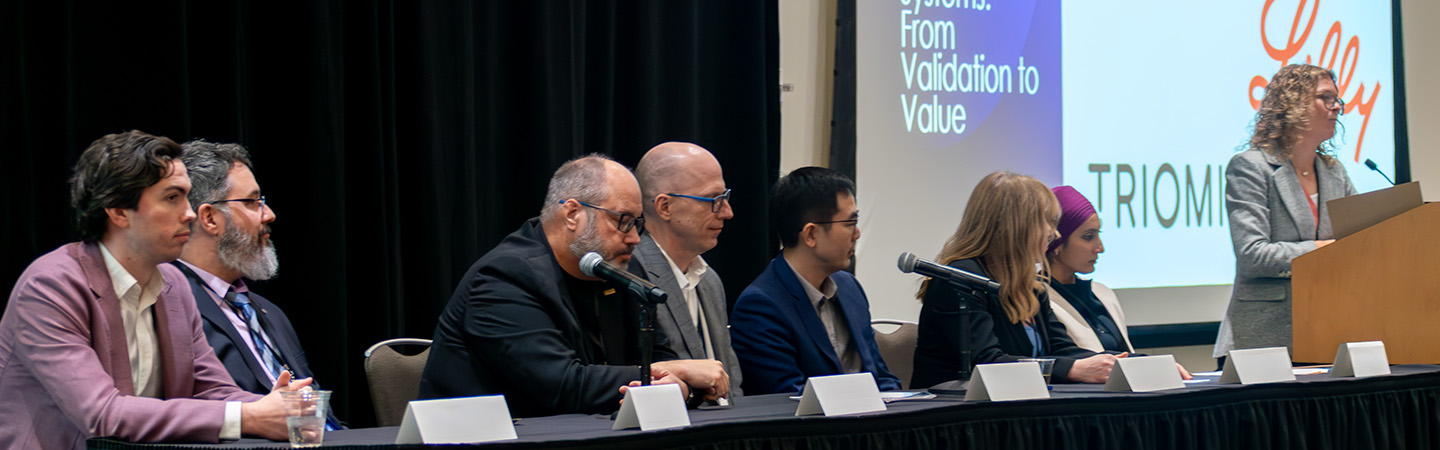

2020 event co-chaired by Regenstrief researcher scientists
More than 400 people from around the world signed up to attend the American Delirium Society’s 2020 virtual annual meeting. Presenters and participants discussed the latest in delirium research, from diagnosing the acute brain failure to strategies to reduce delirium incidence. The meeting was co-chaired by Babar Khan, M.D., M.S., Regenstrief Institute research scientist, American Delirium Society (ADS) president and Indiana University School of Medicine associate professor and Noll Campbell, PharmD, M.S., Regenstrief research scientist, ADS treasurer and Purdue College of Pharmacy assistant professor.
The annual ADS meeting was scheduled to be held in Indianapolis, but organizers moved it online in light of the COVID-19 pandemic. About three dozen experts presented keynotes and participated in abstract sessions.
More than seven million hospitalized Americans suffer from delirium each year. Delirium is a state of confusion that comes on very suddenly and can last for hours or days. It often leads to longer hospital stays, more complications, higher mortality rates, and dementia or long-term cognitive impairment. It frequently occurs in patients treated in the intensive care unit, especially those who are older than 65.
Delirium is often not diagnosed by the healthcare system, and its impact on patients’ health is often not understood. The ADS works to lead the effort to foster research, education, quality improvement, advocacy and implementation science to minimize the impact of delirium on the health and wellbeing of patients.
“Research and education about delirium is especially important during the COVID-19 pandemic,” said Dr. Khan, who served as ADS president for the 2019-2020 term. “We expect that as more COVID-19 patients are treated in the ICU, many will suffer delirium and will feel its impact in the long-term. The sharing of research and discourse during this conference will help care providers better understand this condition and provide better care for patients.”
Regenstrief Research Scientist and IU School of Medicine Assistant Professor Sikandar Khan, D.O., and IU School of Medicine Administrative Coordinator Makenna Flory assisted with managing the technology during the digital conference.
The Indianapolis ADS meeting has been rescheduled for March 2021.
The Latest