



Oct 2025
Learning from Misses: Evaluating a Clinical Decision Support for Chronic Pain Management in Primary Care
Publication: Applied Clinical Informatics


LOINC, developed and maintained by the Regenstrief Institute, was featured by AP...
Regenstrief Data Services (RDS) provided critical health data and specialized...


Regenstrief Institute x Merck The Question Clinical trials establish whether...

Regenstrief, Triomics and Indiana University Health, supported by an independent...
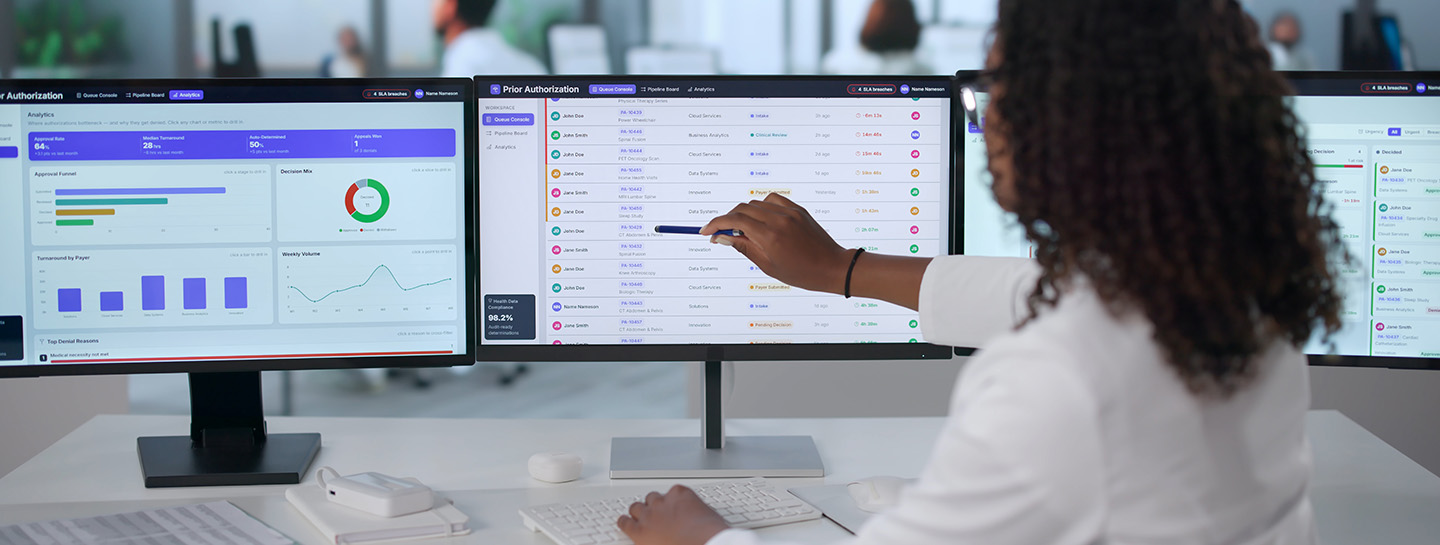
Regenstrief Data Services (RDS) provided critical health data and specialized expertise to support research examining clinical decision-support use across more than 145,000 primary care encounters.
Clinical decision-support tools have the potential to help clinicians make evidence-based decisions, access relevant patient information and navigate complex care. However, making a tool available in an electronic health record (EHR) does not guarantee that clinicians will use it in routine practice.
Understanding how these technologies are used requires more than access to health data. Researchers must also be able to connect information from different sources to examine how clinical tools are used during patient care.
A study published in PLOS Digital Health examined when and by whom clinicians used OneSheet, an EHR-based clinical decision-support tool designed to support chronic pain management in primary care.
RDS played an important role in the research by providing access to critical EHR data and specialized expertise in data management. This support enabled researchers to examine patterns of OneSheet use across 145,511 patient encounters involving 69 primary care clinicians.
To understand how OneSheet was used in clinical practice, researchers needed to examine information about individual patient encounters alongside data documenting clinicians’ interactions with the tool.
RDS brokered access to EHR data associated with OneSheet use, including information about patient encounters, diagnoses and prescriptions.
The research required appropriate linkage between clinical information and OneSheet usage data, allowing the team to examine how patient and encounter characteristics related to clinicians’ use of the tool.
Evgenia Teal, an RDS analyst, worked closely with the research team and Eskenazi Health to identify and address the project’s data needs. Through an iterative process, Teal and the team reviewed the data requirements and worked to ensure that clinical information was appropriately linked with OneSheet usage data.
This collaboration helped establish the data foundation needed to examine how the tool was used during actual patient encounters rather than relying solely on clinician surveys or recollections.
The work also demonstrates the value of involving data experts throughout the research process. By partnering directly with investigators and healthcare organizations, RDS analysts can help researchers navigate complex health information and ensure that the data support their research questions.
The analysis found that clinicians accessed OneSheet during just 0.7 percent of the patient encounters included in the study.
Use was more likely during encounters in which chronic pain was directly addressed or when a patient was prescribed long-term opioid therapy.
Previous use of OneSheet did not make clinicians more likely to use the tool again.
The findings suggest that making clinical decision support tools available within an EHR may not be sufficient to encourage routine use. Understanding when a tool is clinically relevant and how it fits into existing workflows may help healthcare organizations identify opportunities to improve implementation.
The researchers also observed differences in use based on clinician characteristics, although some findings related to clinical experience may have been influenced by a small number of highly experienced participants.
By connecting clinical information with technology usage data, the research provides insight into the circumstances in which clinicians engage with digital tools during patient care.
As healthcare organizations introduce new digital technologies, understanding how those tools function in real-world clinical settings is essential.
Evidence about actual use can help researchers, health systems and technology developers identify barriers to adoption, assess workflow integration and better understand how clinical tools fit into patient care.
The OneSheet research illustrates how access to well-managed health data and specialized data expertise can support these efforts.
RDS’s contribution also extends beyond this individual publication. The data and collaborative work supported several research papers examining OneSheet and its use in clinical care.
Through partnerships with investigators and healthcare organizations, Regenstrief Data Services helps transform complex health information into evidence that can inform healthcare delivery and the implementation of digital health technologies.
Read the research: https://journals.plos.org/digitalhealth/article?id=10.1371/journal.pdig.0001032

Publication: Applied Clinical Informatics
Publication: JAMIA Open

Organizations share a commitment to understanding how ambient AI technologies impact clinicians, patients and healthcare delivery Regenstrief Institute and Suki, a

Peter J. Embí, M.D., M.S., former president and CEO of the Regenstrief Institute, has been appointed director of the
LIVINGkidney digital tool recognized in national HHS competition focused on reducing barriers for living kidney donors and transplant patients Regenstrief

Release expands terminology for drug and toxicology testing, microbiology, public health reporting and allergy information Regenstrief Institute has released