








Regenstrief researchers contribute to a national study highlighting differences between Medicare Advantage and traditional Medicare
For people with kidney failure, access to transplantation can mean better survival and quality of life. A study published in JAMA raises questions about whether patients have comparable access across Medicare coverage options.
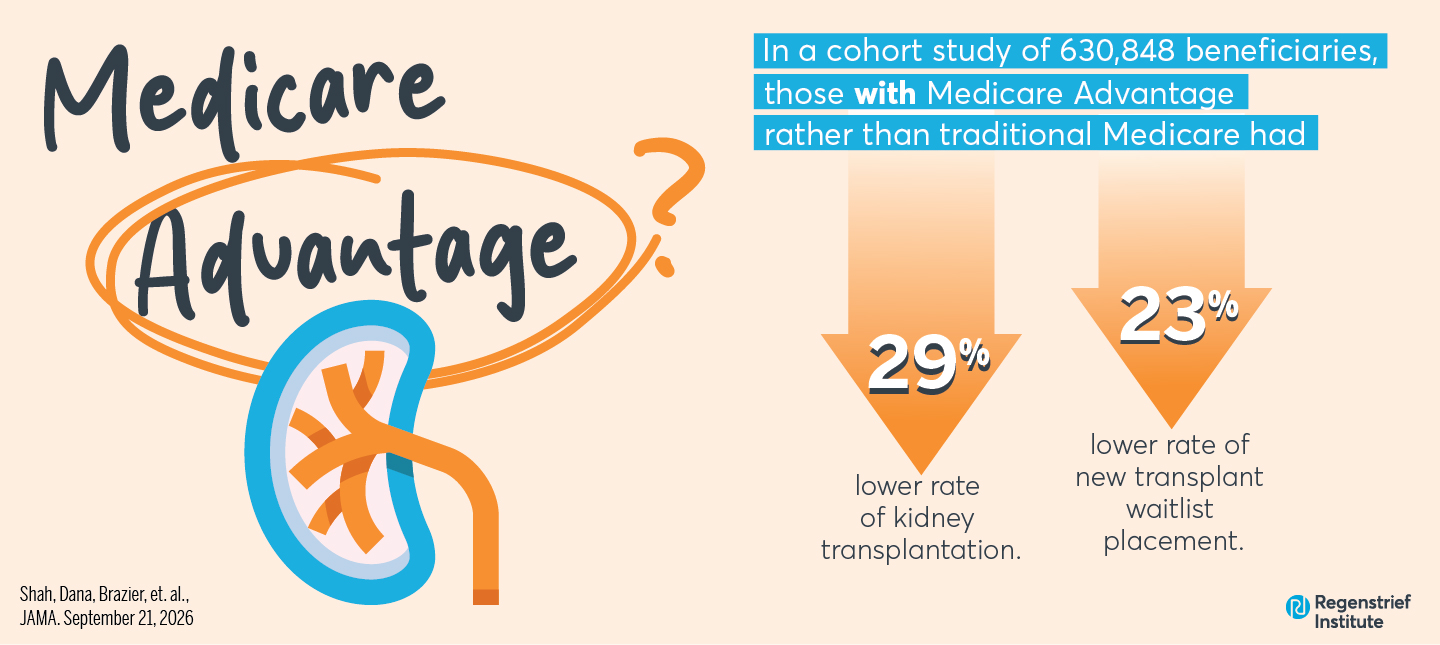
The Brown University-led study examined 630,848 Medicare beneficiaries with end-stage kidney disease from 2021 through 2023. After adjusting for measured differences between patients, researchers found that Medicare Advantage enrollees had a 29 percent lower rate of kidney transplantation and a 23 percent lower rate of being newly placed on a transplant waiting list than traditional Medicare beneficiaries.
Regenstrief-affiliated researchers Kelsey Drewry, PhD, M.A., Adam Wilk, PhD, and Rachel Patzer, PhD, MPH, contributed to the research. Drs. Patzer and Drewry helped develop the study’s concept and design, and all three contributed to its data acquisition, analysis or interpretation and critical manuscript review. Dr. Patzer also helped secure funding and supervise the work.
The findings highlight an important policy question: How can expanded insurance options translate into meaningful access to treatment?
The study followed a federal policy change that expanded Medicare Advantage eligibility for people with end-stage kidney disease in 2021. Although the findings do not establish that Medicare Advantage caused the differences, they support closer monitoring of transplant access and further examination of potential barriers, including provider networks and prior authorization.
For Regenstrief, this collaboration illustrates how health services research can inform policy discussions by examining patients’ experiences across the healthcare system. Understanding where access differs is a necessary step toward identifying changes that could improve care.