





VIEW RECORDINGS OF THE CONFERENCE
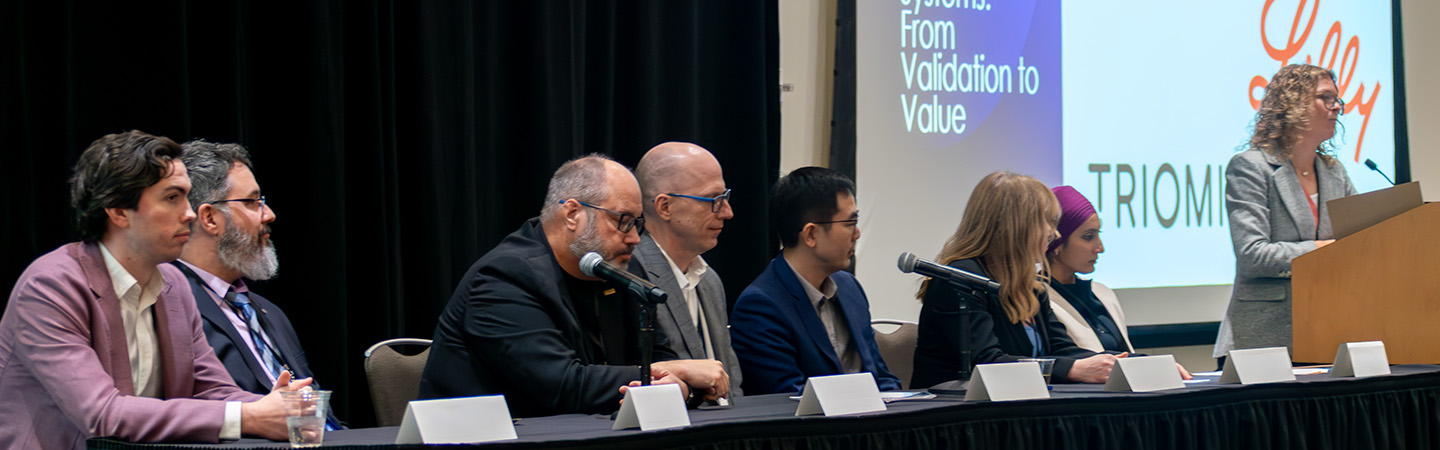
More than 500 people from 16 countries engaged in a dynamic discussion on artificial intelligence (AI) in healthcare hosted by Regenstrief Institute and Indiana Clinical and Translational Sciences Institute (CTSI). The three-day virtual event, Artificial Intelligence: Applying Research and Engineering Solutions for Emergent Needs in Healthcare, featured international thought leaders sharing their perspectives and experience in the growing field.
AI is poised to play a major role in healthcare. The conference keynotes and panels explored the development of the technology, its potential applications, its potential drawbacks and strategies for implementation. Experts discussed realistic goals and expectations for the technology and answered questions posed by attendees.
Marc Overhage, M.D., PhD, former chief medical informatics officer at Cerner, delivered a keynote presentation on applying AI in the physician-patient encounter and clinical decision making. He then joined the discussion panel with Kathleen Unroe, M.D., MHA from Regenstrief Institute, Indiana University School of Medicine and CEO of Probari; Michael Matheny, M.D., MPH from Vanderbilt University and Tennessee Valley Healthcare System’s Nashville VA Medical Center; and Joshua Vest from Regenstrief and Indiana University Richard M. Fairbanks School of Public Health at IUPUI.
Nigam Shah, MBBS, PhD, associate chief information officer for data science at Stanford Health Care and associate professor at Stanford University, presented a keynote on the future of AI in healthcare. Regenstrief President and Chief Executive Officer Peter Embí, M.D.; Kenneth W. Goodman of the University of Miami Miller School of Medicine’s Institute for Bioethics and Health Policy; Peter Schwartz of Indiana CTSI and IU School of Medicine and Eneida Mendonca, M.D., PhD, vice president for research development at Regenstrief, explored potential unintended consequences of AI.
Marco Antonio Gutierrez, PhD, head of Informatics Division, Heart Institute, University of Sao Paulo Medical School, Brazil, delivered a keynote on using artificial intelligence in COVID-19 screening before joining the panel to discuss the building blocks of AI. Other experts on the panel were Mohammad (Adib) Adibuzzaman, PhD, from the Regenstrief Center for Healthcare Engineering at Purdue University; Allen Flynn, PhD, PharmD from the University of Michigan Medical School and Umberto Tachinardi, PhD, Regenstrief chief information officer.
The 500 attendees came from Argentina, Brazil, Canada, India, Kuwait, Morocco, Netherlands, Nigeria, Norway, Saudi Arabia, Senegal, Scotland, South Africa, Taiwan, United Arab Emirates and the United States.
The Latest