






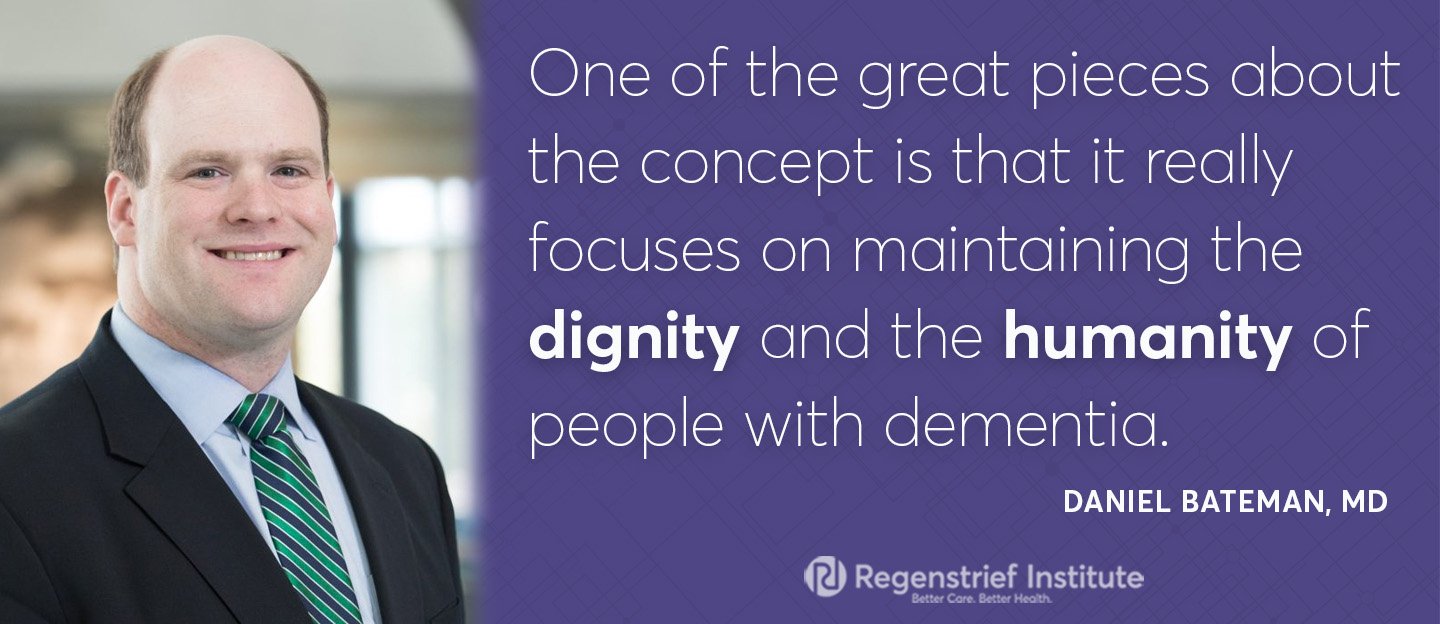
“It really focuses on maintaining the dignity of people with dementia,” Dr. Bateman tells U.S. News and World Report
Regenstrief researcher Daniel Bateman, M.D., is intrigued by reminiscence therapy and its possibilities.
Dr. Bateman spoke to U.S. News and World Report about reminiscence therapy programs like the one at Glenner Town Square in California. Reminiscence therapy is the use of sights, smells, and other sensory stimuli to evoke memories from a person’s past. The senior day care center provides the therapy through immersive environments from the 1950s, such as a department store and a barber, scenes that would be familiar to the people served by the facility.
There is currently no medicine that reverses Alzheimer’s disease and related dementias or significantly eases symptoms, so quality-of-life initiatives have become more important.
“It’s cutting edge and it’s exciting work,” Dr. Bateman said of reminiscence therapy. “One of the great pieces about the concept is that it really focuses on maintaining the dignity and the humanity of people with dementia, which can often be lost.”
Dr. Bateman’s primary research interest is studying and implementing innovative approaches to measure and treat behavioral and psychological symptoms of dementia. He focuses on the use of technology interventions to improve the health of people with dementia and their caregivers.
You can read Dr. Bateman’s interview here.
In addition to his position at Regenstrief, Dr. Batmen is an assistant professor at the Indiana University School of Medicine, an implementation scientist with the Center for Health Innovation and Implementation Science, and a co-investigator at the Indiana Alzheimer Disease Center.
The Latest