






A new tool seeks to predict the severity of patients’ postoperative delirium and help practitioners more effectively care for patients as they recover from surgery.
Currently providers only have tools for predicting whether or not patients will develop delirium, not its severity. Regenstrief Institute fellow Heidi Lindroth, Ph.D., and Robert D. Sanders, M.D.’s team at the University of Wisconsin-Madison aim to change that. By predicting the intensity of delirium in the aftermath of an elective surgery, Dr. Lindroth hopes to help reduce delirium incidence and impact in postoperative settings. She will participate in a symposium on predicting delirium at the American Delirium Society Annual Meeting, June 17-18.
Delirium, a serious acute change in brain function often manifesting as confusion, restlessness, agitation and difficulty speaking, occurs in as many as 7 million people annually. Complications from delirium can be devastating and long-lasting, including cognitive decline, post-traumatic stress disorder and increased risk of death within a year of discharge.
In her study, Dr. Lindroth and the team used data from a cohort of 100 adults undergoing non-cardiac, non-neurological surgery. Participants were 65 years of age or older, and all had a minimum of two days in the hospital following their procedures.
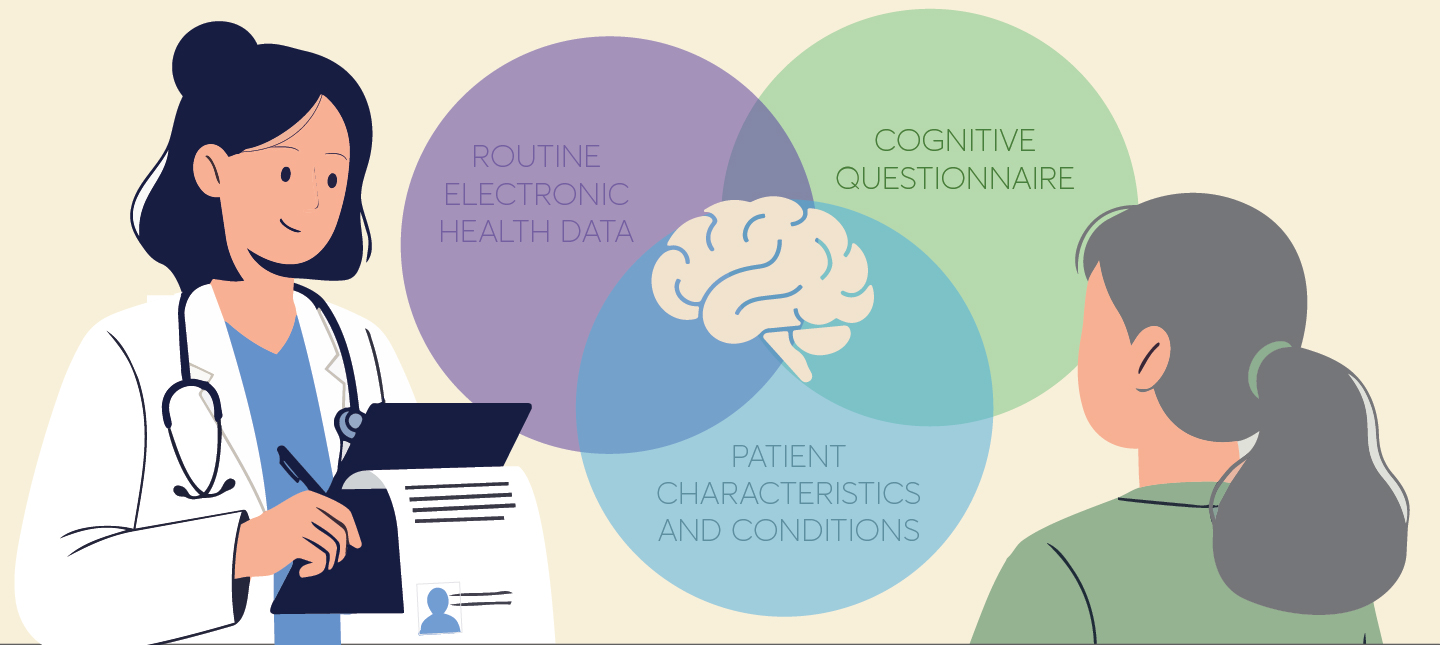
The team combined two previously unrelated tools, neither of which was originally designed to assess delirium, to create an innovative instrument that can predict delirium severity. To collect data on the patients’ quality of life, the team used the National Surgical Quality Improvement Program (NSQIP) tools to assess risks of serious complications (NSQIP-SC) and death (NSQIP-D) before the operation. Alongside the risk prediction tools, the team assessed patients before and after surgery with the Trail Making Tests A and B for differences in cognitive functions.
“In the clinical world, we don’t have a way to predict which patients will be at the greatest risk for severe delirium after surgery,” said Dr. Lindroth. “What’s more, in the research world, current tools only predict delirium as a binary, and most detection tools only look for patients with delirium at a level of impairment near that of dementia. This combination of tools gives a much-needed emphasis on the spectrum of delirium and a blueprint forward for future research into validation of our new tool.”
Dr. Lindroth is a postdoctoral scholar with the Center for Health Innovation and Implementation Science and the Center on Aging Research at the Regenstrief Institute. Her work is funded through the Indiana University School of Medicine’s Division of Pulmonary and Critical Care. She specializes in delirium prevention in the perioperative setting.
“Predicting postoperative delirium severity in older adults: The role of surgical risk and executive function” is published in the International Journal of Geriatric Psychiatry. In addition to Dr. Lindroth, co-authors include Lisa Bratzke, Ph.D., R.N.; Sara Twadell, B.S.; Paul Rowley, B.S.; Janie Kildow, B.S.; Mara Danner; Lily Turner, B.A., R.N.; Brandon Hernandez, B.S.; Roger Brown, Ph.D.; Robert D. Sanders, Ph.D., M.D. — all of the University of Wisconsin-Madison.
The study was funded by the University of Wisconsin-Madison School of Medicine and Public Health, Department of Anesthesiology.
The Latest