





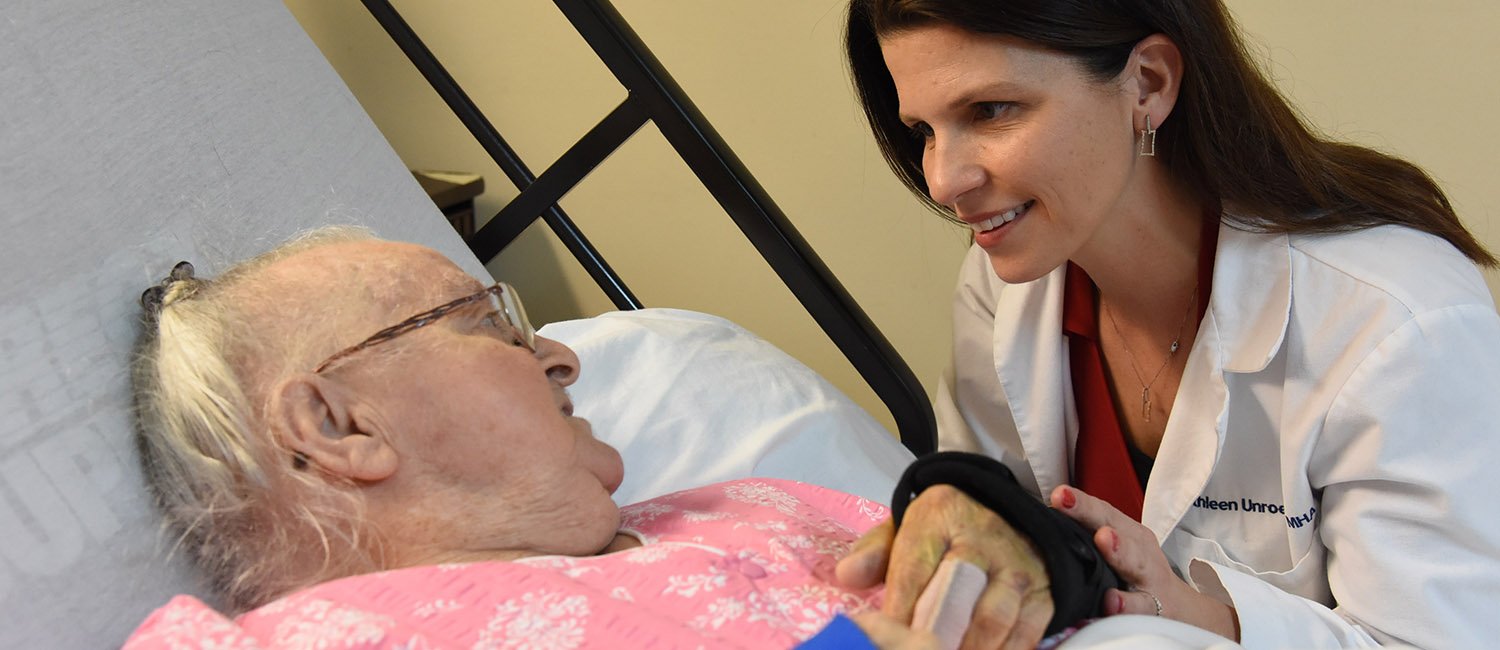
A Regenstrief and Indiana University School of Medicine program was featured in LeadingAge Magazine for its success at reducing unnecessary hospitalizations for people living in long-stay nursing homes.
The magazine gave an in-depth look at the Optimizing Patient Transfers, Impacting Medical Quality, and Improving Symptoms: Transforming Institutional Care (OPTIMISTIC) program, reporting that it is leading the way in streamlining transitions of care and reducing hospitalizations.
OPTIMISTIC was one of two nursing-intensive initiatives highlighted in the article because of its success in the Centers for Medicare and Medicaid Services (CMS) Initiative to Reduce Avoidable Hospitalizations among Nursing Facility Residents.
“OPTIMISTIC is about developing a more comprehensive approach to the many drivers of rehospitalizations,” Kathleen Unroe, M.D., principal investigator of OPTIMISTIC and acting director of the Center for Aging Research, told LeadingAge.
The OPTIMISTIC model embeds a specially trained nurse in each nursing home. The nurse analyzes the reasons any resident is transferred to the hospital, then identifies opportunities for improvement in the transfer process and trends at the caregiving level.
“They conduct a detailed transition evaluation when a resident returns to the facility,” Dr. Unroe said. “They address polypharmacy and overall care planning.”
Facilities with these services were able to treat more residents in place, rather than sending them to the hospital. The program decreased avoidable hospitalizations by one third.
Right now, OPTIMISTIC is in phase two, testing a CMS payment model to incentivize facilities to provide higher levels of care on site. That grant ends in 2020.
The Latest