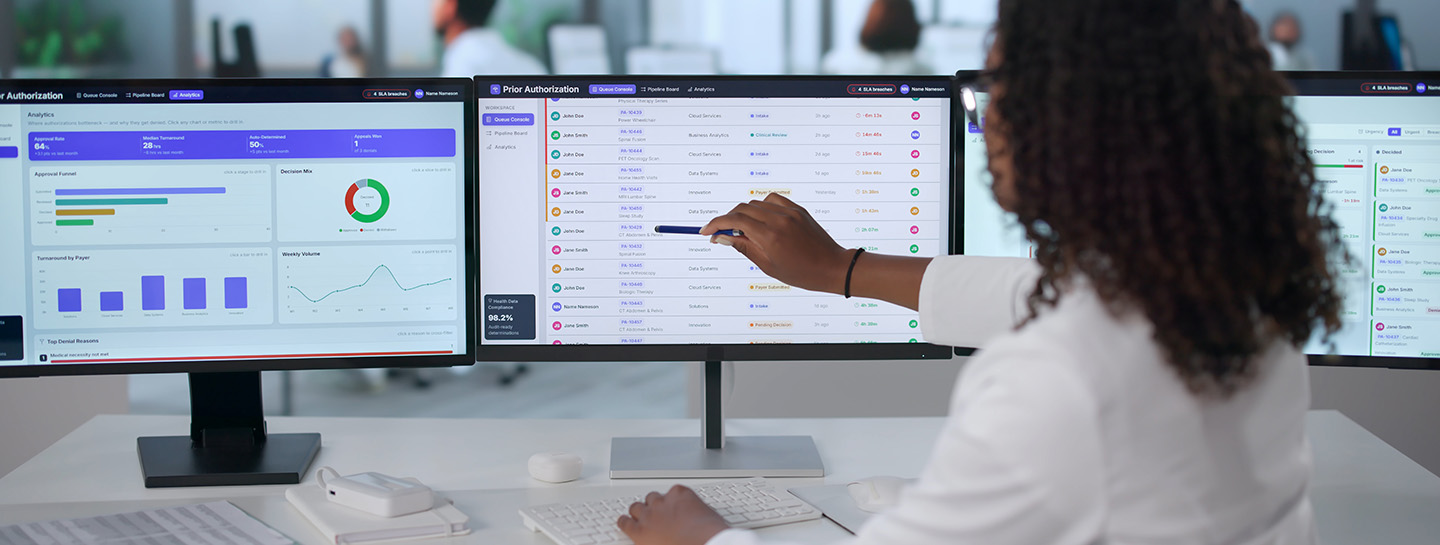







A pair of Regenstrief Institute research scientists laid out opportunities for implementing decision support tools to assist with collaborative care in an effort to improve healthcare delivery.
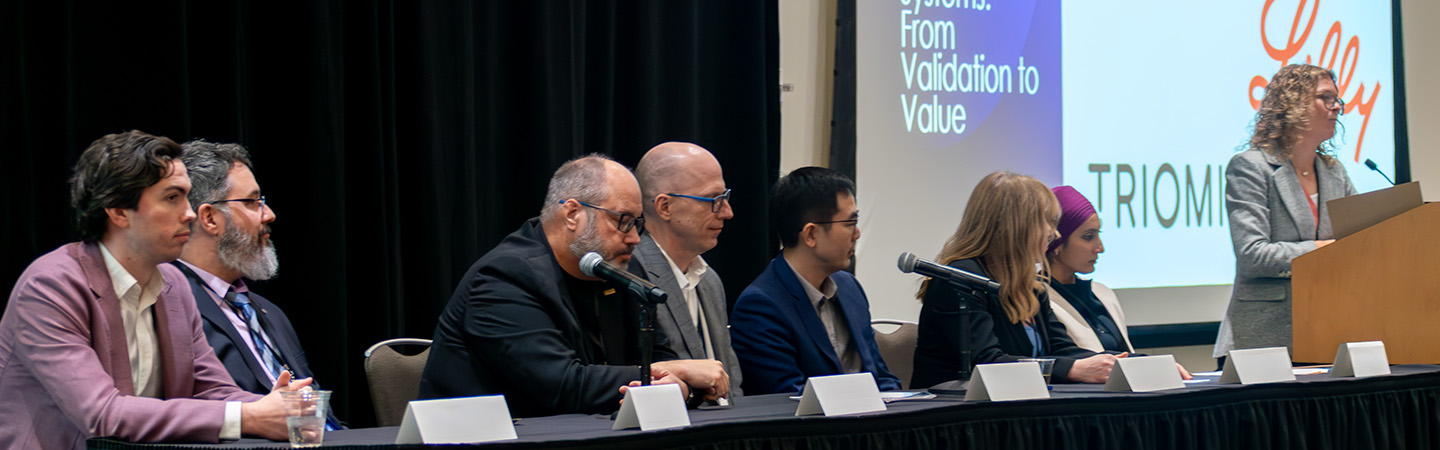
In a presentation at the American Medical Informatics Association’s 2021 Annual Symposium, Paul Dexter, M.D., and Titus Schleyer, DMD, PhD, discussed how computerized clinical decision support will be essential to ensuring the safety and efficiency of new care delivery models. They stated the tools can be used by multi-disciplinary teams to empower non-physician team members, coordinate overall team efforts and facilitate physician oversight.
The presentation and article featured primary care clinical scenarios that could benefit from clinical decision support optimized for team-based healthcare.
Throughout their careers, both Dr. Dexter and Dr. Schleyer have worked extensively on developing clinical decision support tools.
Dr. Dexter has focused on adapting Regenstrief’s information systems for both clinical and research purposes and has conducted multiple trials related to computerized clinical reminder systems. He helped implement a robust research IT infrastructure that includes tools related to decision support. In addition to his role as a research scientist at Regenstrief, Dr. Dexter is an associate professor of clinical medicine at Indiana University School of Medicine.
Dr. Schleyer has conducted research on workflow and human-computer interaction in dentistry, as well as created an award-winning app called Health Dart for emergency departments. The app gathers electronic health records data from the health information exchange related to seven of the most common complaints in the emergency room. Dr. Schleyer is the program director for learning health informatics at Regenstrief and is a professor of biomedical informatics at IU School of Medicine.
“Golden opportunities for clinical decision support in an era of team-based healthcare” is published in the 2021 AMIA Annual Symposium Proceedings.
The Latest