






Regenstrief and IU researchers developed and tested tool that assesses caregiver as well as patient burden
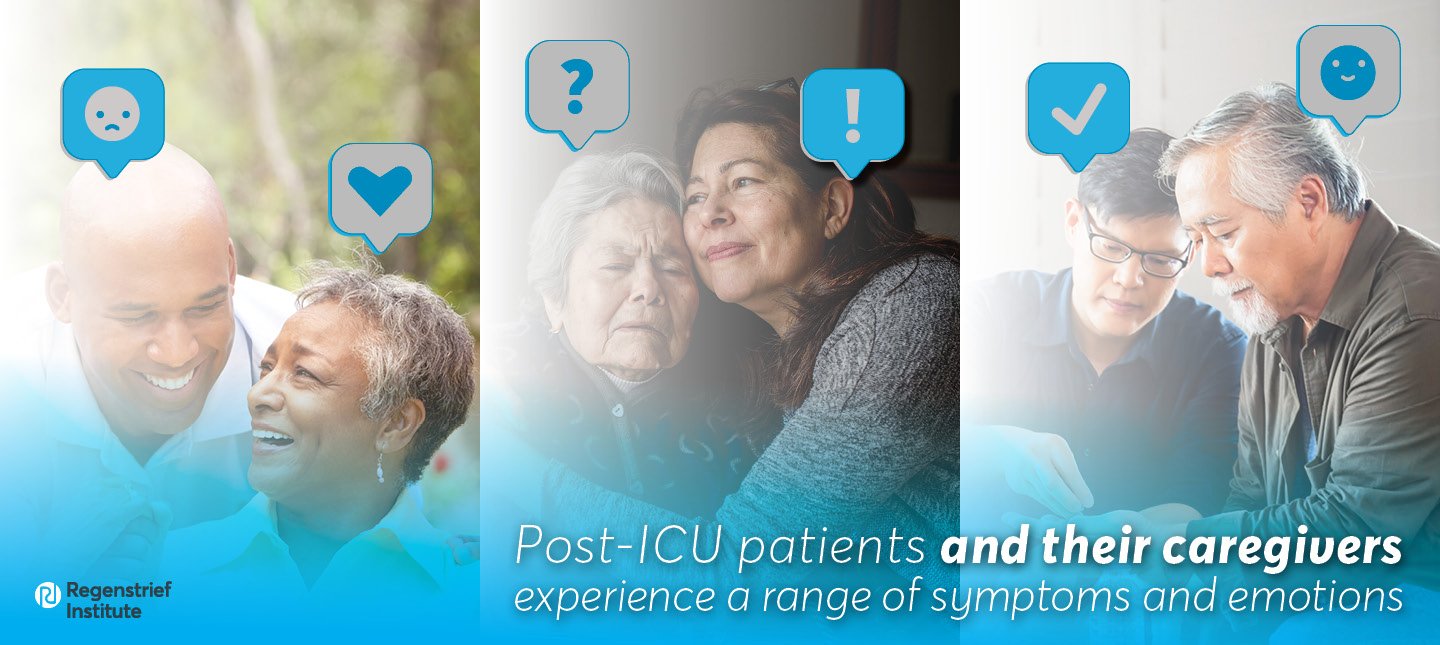
A new study from Regenstrief Institute and Indiana University School of Medicine validates the caregiver version of the Healthy Aging Brain Care Monitor as an accurate, dynamic tool for monitoring the burden of post-intensive care unit (ICU) symptoms among ICU survivors through their caregiver’s input and for providing clinically relevant information on new or changing physical, mental and emotional symptoms of adults who have received ICU care.
The researchers originally developed the Healthy Aging Brain Care (HABC) Monitor to measure severity of dementia symptoms in older adults. They have now shown the caregiver version to be an effective tool to evaluate both the symptoms known collectively as post-intensive care syndrome and the syndrome’s impact on the patient’s caregiver.
“Throughout the pandemic, many adults of all ages have been sent to the ICU due to critical illness. Over half of ICU survivors suffer long-term consequences from their illness. Clinicians and researchers need a better grasp on how these patients do after they leave the hospital,” said study senior author Babar Khan, M.D., M.S., Regenstrief Institute research scientist and IU School of Medicine associate professor of medicine. “The HABC Monitor — Caregiver Version gives us a snapshot each time the test is administered, enabling us to see patient improvement or decline and to learn how their caregiver is faring. No other tool exists that utilizes caregiver input to assess post-ICU syndrome symptoms. The HABC Monitor — Caregiver Version couldn’t be more needed than now.”
Symptoms of post-ICU syndrome include anxiety, depression, poor concentration, difficulty talking, muscle weakness, decreased mobility and breathing problems.
Responding to the tool’s questions requires only a five-to-10-minute commitment from the caregiver, enabling clinicians to acquire information to support treatment planning that the patient can’t provide due to brain fog, memory lapses, judgment issues or other problems. Caregivers are asked to indicate frequency over the past two weeks with which the patient experienced specific physical, psychological and cognitive symptoms. Additionally, the caregivers are asked to evaluate their own quality of life, financial future, as well as mental and physical health over the past two weeks.
The tool can be administered via telephone, during a telehealth appointment or used in medical offices as well as in the growing number of critical care recovery centers opening across the U.S. The critical care recovery center model was developed by Dr. Khan and colleagues.
“There is increasing concern that COVID-19 ICU survivors will be at higher risk for post-ICU cognitive impairment and dementia given the high incidence of delirium and stroke in this subset of patients,” said study first author Sophia Wang, M.D., IU School of Medicine assistant professor of clinical psychiatry. “The caregiver version of the HABC monitor gives us a much-needed tool for rapid detection of problems that isn’t limited by the patient’s degree of cognitive impairment.”
“Healthy Aging Brain Care Monitor, Caregiver Version: Screening for Post–Intensive Care Syndrome” is published in American Journal of Critical Care. Authors in addition to Drs. Babar Khan and Wang are Sikandar Khan, D.O., and Malaz Boustani, M.D., MPH, of Regenstrief Institute and IU School of Medicine; Yameena Jawed, M.D., of University of California San Francisco; Anthony Perkins, M.S.; Sujuan Gao, PhD; and Sarah Seyffert, M.D., all of IU School of Medicine. The authors were supported by several National Institutes of Health grants.
About Babar Khan, M.D., M.S.
In addition to his appointment as a Regenstrief Institute research scientist and as associate director of the Indiana University Center for Aging at Regenstrief, Babar Khan, M.D., M.S., is an IU School of Medicine associate professor of medicine and the Floyd and Reba Smith Investigator in Respiratory Disease.
About Regenstrief Institute
Founded in 1969 in Indianapolis, Regenstrief Institute is a local, national and global leader dedicated to a world where better information empowers people to end disease and realize true health. A key research partner to Indiana University, Regenstrief and its research scientists are responsible for a growing number of major healthcare innovations and studies. Examples range from the development of global health information technology standards that enable the use and interoperability of electronic health records to improving patient-physician communications, to creating models of care that inform practice and improve the lives of patients around the globe.
Sam Regenstrief, a nationally successful entrepreneur from Connersville, Indiana, founded the institute with the goal of making healthcare more efficient and accessible for everyone. His vision continues to guide the institute’s research mission.
About IU School of Medicine
IU School of Medicine is the largest medical school in the U.S. and is annually ranked among the top medical schools in the nation by U.S. News & World Report. The school offers high-quality medical education, access to leading medical research and rich campus life in nine Indiana cities, including rural and urban locations consistently recognized for livability.
The Latest